Call Sheet for Film and Video Production
By Filmdoq Team · 2026 Aug 25
It’s 5:00 AM on a shoot day. The crew is arriving. Talent is getting ready. Equipment is being unloaded. The location manager is waiting at the entrance, and the first shot is supposed to happen in less than 2 hours. Then your phone starts buzzing.
“What’s the address?”
“What is my call time?”
“Where do I park?”
“What are we shooting first?”
“What time do we wrap?”
None of these questions are unreasonable. The problem is that you have already answered them. They were in the email you sent out yesterday. They were in the production group chat. They were probably also in a spreadsheet somewhere. This is exactly why a call sheet matters.
What Is a Call Sheet?
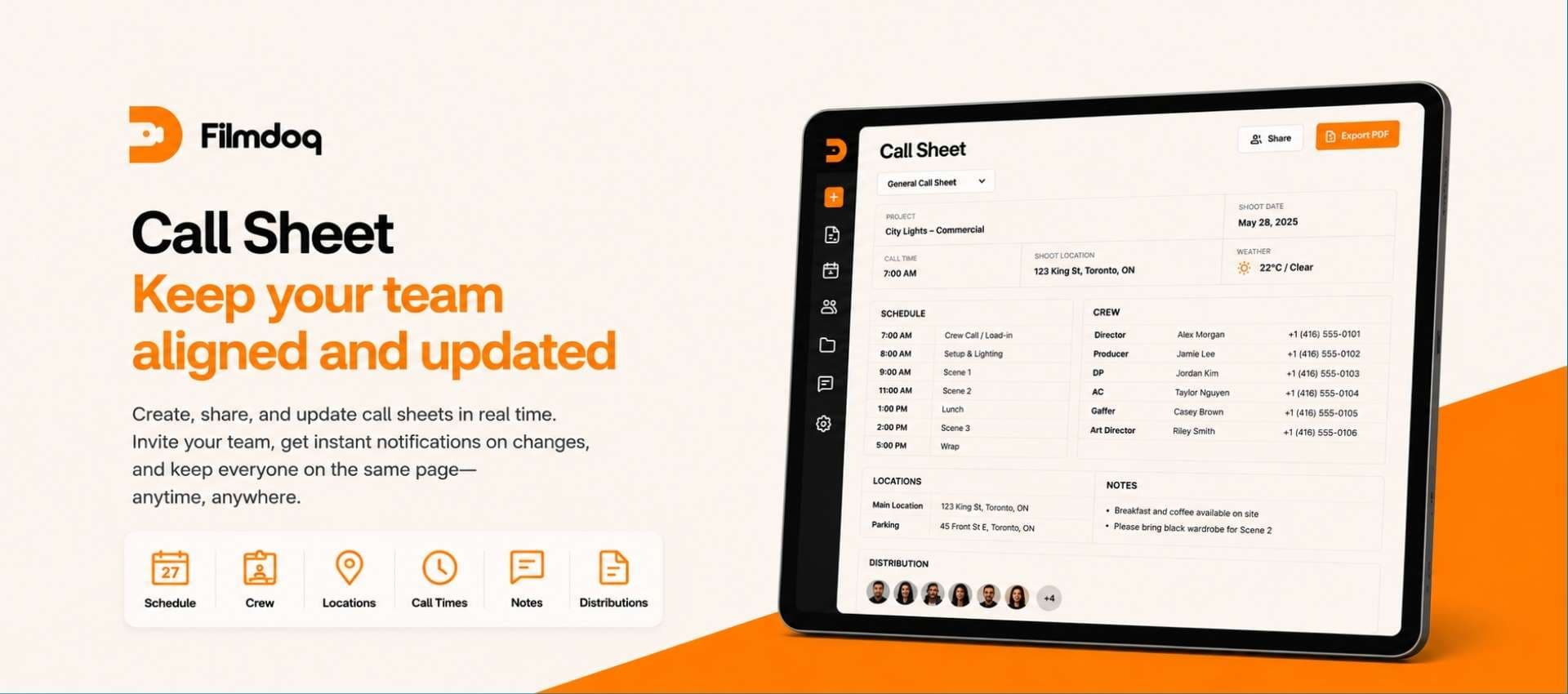
A call sheet is a production document that gives the cast and crew the essential information they need for a specific shoot day. It typically includes the production schedule, call times, location, contact information, scenes or shots being filmed, talent requirements, parking and access information, safety notes, weather, meal times, and other important production details.
In other words, a call sheet answers one simple question:
“What does everyone need to know before they arrive on set?”
For a small production, that information might fit on a few pages. For a larger commercial, film, television production, music video, corporate video, or photography shoot, the amount of information can become substantial. The challenge isn't simply creating a call sheet. It's making sure the information inside it is accurate, current, and accessible to everyone who needs it. This is where having a proper production workflow becomes important.
Why Do You Need a Call Sheet?
A production can have a great concept, talented crew, expensive equipment and a carefully planned schedule. But if people don't know where they're supposed to be or what they're supposed to do, the day can quickly become chaotic. A call sheet creates a shared point of reference.
Instead of the producer repeatedly telling the cinematographer when to arrive, the actor where to go, the makeup artist when to start, and the client when the first setup is scheduled, everyone can refer to the same production document.
This is especially important when you're working with a larger crew or multiple departments. The director, producer, cinematographer, assistant director, camera team, lighting team, sound department, art department, talent and client may all have different responsibilities, but they still need to understand how their work fits into the day's schedule. A well-prepared call sheet brings that information together.
Creating a Call Sheet Starts Before Shoot Day
One of the biggest mistakes is thinking about the call sheet as something you create at the very last minute. A good call sheet is really the result of everything you've already planned.
You need to know the shooting location. You need to know when the crew needs to arrive. You need to understand which scenes or shots are being captured. You need to know which talent is required, what equipment is needed, when departments need to begin work, and how long each part of the day is expected to take. That information usually comes from your production brief, budget, shot list and shooting schedule.
The call sheet brings those decisions together into something the crew can actually use on the day. This is one reason a connected production workflow can be so valuable. With Filmdoq, the call sheet can exist as part of the larger production process rather than as an isolated document you have to build from scratch every time.
What Should a Call Sheet Include?
There isn't one universal format that every production must follow, because a commercial, feature film, music video and photography shoot can have very different requirements.
However, a professional call sheet will generally include the core information people need to execute the day.
Production Information
Start with the basic details.
Include the project title, production company, production date, shoot day, production type and relevant contact information.
Call Times
Call times are one of the most important parts of a call sheet.
Not everyone necessarily arrives at the same time.The director might arrive before the general crew call. Hair and makeup may need an earlier call. Talent may have individual call times. Equipment teams may need to arrive even earlier for setup. Clearly identifying these times helps prevent people from arriving too early, too late, or at the wrong time.
Location
The call sheet should clearly identify where everyone needs to go. Include the location name, full address and any important access instructions. If the location is difficult to find, add useful directions or information about the entrance the crew should use.
For productions taking place across multiple locations, make sure the day's movement between locations is clear.
Parking and Access
Parking information might seem like a minor detail until twenty people arrive at a location and nobody knows where they're allowed to park.
If there are specific parking instructions, loading zones, entrances, security requirements, elevators, access codes or restricted areas, include them.
Crew
Everyone who needs to be involved in the production should know who is responsible for what.
Depending on the size of the production, this may include the producer, director, cinematographer, camera department, lighting department, sound department, production assistants, makeup and hair, wardrobe, art department and other crew.
Including contact information for key production personnel makes communication much easier when something changes.
Talent
If actors, models, presenters or other talent are involved, the call sheet should make their requirements clear.
Include their individual call times, scenes or shots they are required for, and relevant preparation information. This allows production to coordinate talent without requiring everyone to know the entire schedule.
Shooting Schedule
The crew needs to know what is actually happening during the day. The schedule should identify the scenes, shots, setups or activities being captured and the approximate times associated with them. This gives everyone a sense of how the day is expected to progress. More importantly, it helps departments prepare for what is coming next.
Filmdoq Call sheet keeps Everyone updated when things change
With Filmdoq Call Sheet, keeping everyone updated is built into the collaboration process. Simply invite your team members to the call sheet, and they’ll receive notifications when changes are made and see updates in real time. If the location, call time, schedule, crew, or other details change, there’s no need to email everyone a new copy.
If someone has a scheduling concern or question, they can leave a comment directly on the call sheet, keeping the conversation connected to the information being discussed. No more scattered WhatsApp messages or long email threads, everyone stays aligned in one place.
Call Sheets for Commercial Productions
Call sheets aren't only for movies. They're extremely useful for commercial video production, branded content, corporate videos, social media campaigns, product videos and client photography.
Commercial productions often involve clients, agencies, talent, multiple locations and strict deliverables. Everyone may have different expectations about the day. The call sheet gives the production team a common reference.
For example, a commercial shoot might involve a client representative, director, cinematographer, photographer, models, makeup artist, stylist, production assistants and a location manager. Without a central document, communication can quickly become fragmented.
With a clear call sheet, everyone understands where they need to be and what the production expects from them.
Call Sheets for Independent Filmmakers
Independent filmmakers benefit from them too. You may not have a huge production department. You may be working with a small crew where the director is also the producer and cinematographer. That doesn't make organization less important. In fact, it can make it more important.
When you're wearing multiple hats, you don't want to spend your shoot day answering questions that could have been answered before everyone arrived. A call sheet allows you to communicate the important information once and give everyone something to reference.
Call Sheets for Photography Productions
The same principle applies to photography. A commercial photography shoot may involve models, stylists, makeup artists, assistants, clients, locations, wardrobe changes and multiple setups. The production still needs coordination.
A call sheet can communicate arrival times, location information, talent requirements, setup times, shooting blocks, breaks and contact information. The format may be different from a film production, but the underlying purpose remains the same:
Get the right people, to the right place, at the right time, with the right information.
A Call Sheet Is Part of a Better Production Workflow
A call sheet doesn’t exist in isolation, it’s part of a larger production workflow.
The production brief establishes the creative direction, the budget defines the financial plan, the shot list outlines what needs to be captured, and the shooting schedule determines when everything happens. The call sheet brings that information together and communicates what everyone needs to know to execute the production day. After the shoot, those same decisions continue into post-production, delivery, and client communication.
Filmdoq is built for connecting the different parts of your production in one place, so you’re not managing your project across disconnected documents, spreadsheets, emails, and applications.
From Call Sheet to Complete Production Management
As productions grow, the need for organization grows with them.
What starts as one shoot can become multiple commercial projects, documentaries, music videos, corporate productions and photography assignments running simultaneously.
Suddenly, you're not just trying to create a call sheet. You're managing budgets, schedules, crews, contracts, clients, production documents and deliverables across multiple projects.
That's where a film production management software becomes increasingly valuable. Filmdoq is built around that broader workflow, helping creators and production teams move from the initial idea through planning, production and the documents required to execute the work.
The call sheet is one piece of that systemAnd it serves an important purpose: making sure that when production day finally arrives, everyone knows where to be, when to be there, and what needs to happen next. Because the smoother the information flows before the camera rolls, the more attention your team can give to the thing that actually matters: